Aerial · Aerial cinematography
A move is a sentence. Most aerial footage is a shrug.
The difference between aerial footage and aerial cinematography is whether the camera move means something. An orbit says look at this from every side. A reveal says here is what you could not see. A drift with no intent says nothing at all, however long it is held.
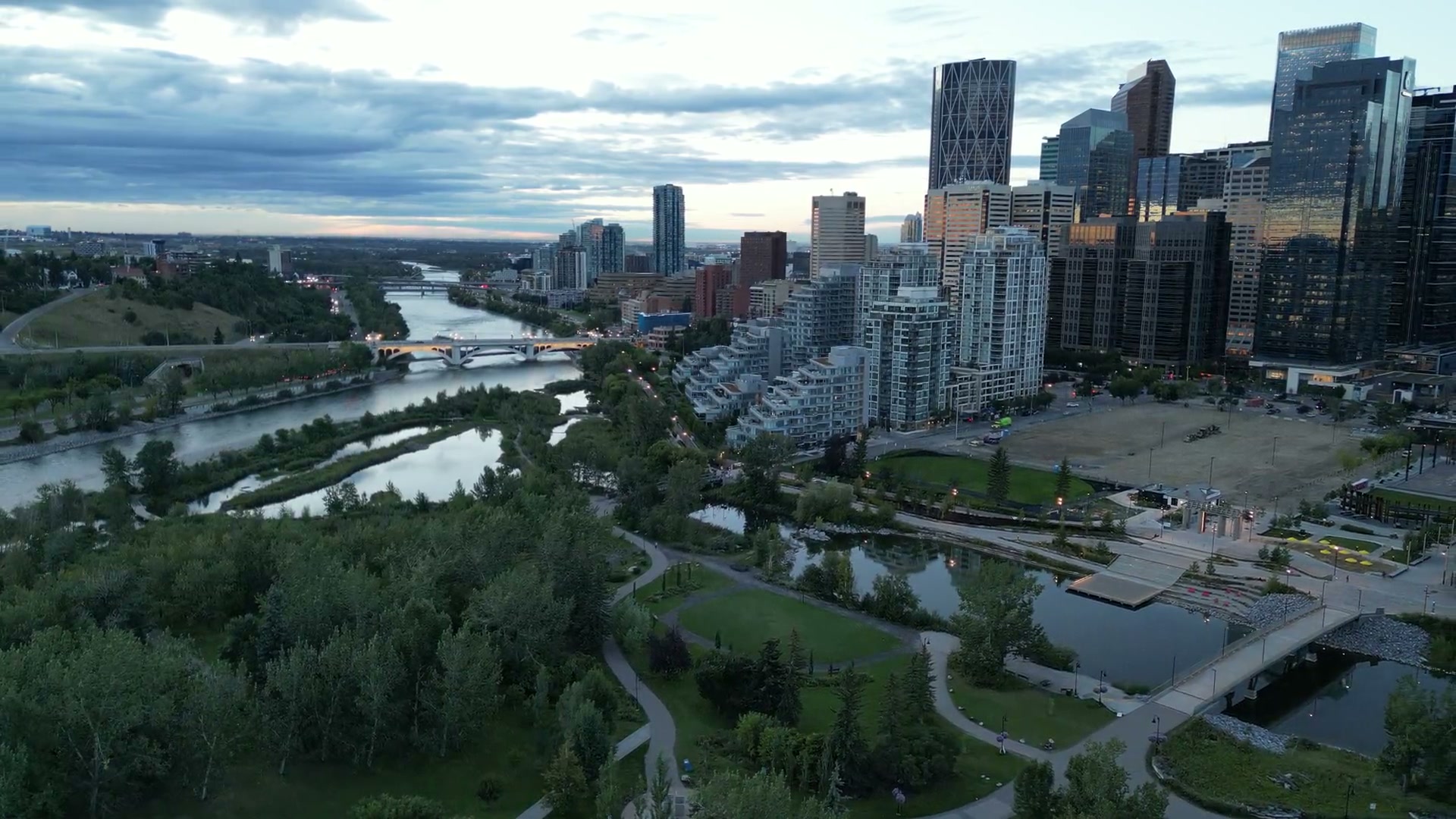
Does Atom2Adam offer aerial cinematography?
Yes. Aerial cinematography is one capability of Atom2Adam, a creative production studio in Calgary, directed as part of the film rather than added to it — orbits, reveals, push-ins and tracking passes for property, hospitality and brand work across Alberta and British Columbia. Every flight is planned against airspace, terrain and the light window before the shoot date is confirmed.
The craft.
What separates a good version of this work from a bad one.
- 01
Every move carries an argument
A rising reveal from valley floor to bench height exists to show elevation. An orbit exists to establish that a property has no bad side. If a move does not make a point, it is footage rather than cinematography.
- 02
Speed is set by the subject's scale
A move that reads correctly over a suburban lot is frantic over a mountain valley and glacial over an interior. Matching speed to scale is what makes a sequence feel composed rather than piloted.
- 03
Terrain decides what is flyable
A valley funnels wind and shortens the light window. In the Bow Valley the usable hour closes well before the published sunset, because the peaks take the sun first.
- 04
The edit is planned at the flight
The shot list is built from the cut, so what is flown is what is used. In post-production the aerial frames are graded in the same colour language as the ground camera, so the sequence reads as one film rather than a film with aerial footage in it.
What is delivered.
Aerial work is delivered inside the commission, graded in the same colour language as everything beside it. How a commission is structured.
Deliverables
- A finished aerial sequence, edited and graded for the screen it will live on
- Colour-consistent with the ground footage it sits beside
- Individual clean moves for the client's own edit
- Camera originals where the commission calls for them
Commonly commissioned for
- Property and development films
- Brand and campaign films
- Venue, resort and hospitality films
- Landscape and establishing sequences
Questions, answered.
What is the difference between aerial video and aerial cinematography?
Intent. Aerial video records what is there from above. Cinematography chooses a move that makes a point — a reveal that shows elevation, an orbit that proves a property has no bad side. The technical capability is identical; the shot list is not, and neither is the grade that follows it.
How long does an aerial cinematography shoot take?
The flying is the short part. The constraint is the light window, which in mountain terrain can be under an hour, and the weather window, which in Alberta's chinook belt can close inside one. Scheduling absorbs both rather than assuming neither.
Can you fly a drone cinematically inside a control zone?
Yes, under an Advanced RPAS certificate with NAV CANADA authorisation filed in advance. Most of Calgary sits inside the CYYC Class C control zone and the city's western edge falls under Springbank (CYBW), so for the studio this is the normal case rather than the exception. The authorisation is in hand before the shoot date is confirmed.